
No products in the cart.
Introduction-PECD Installation Guide Saudi Arabia
PECD Installation Guide Saudi Arabia - The accomplishment of installation of underground telecommunications system relies on proper duct choice, trench preparation, adhering to the proper installation methods, and proper cable protection. Polyethylene Corrugated Duct, which is popularly referred to as PECD, is very often selected for underground fiber optics, broadband and telecommunications networks due to its ability to provide organized trench systems in a network.The PECD Installation Guide aims to describe key methods and processes of PECD installation from planning the route and making the trench till bedding, PECD installation and final inspection. The guide was conceptualized to aid contractors, railway engineers, telecom operators, and project engineers.Saudi Arabia's development of smart cities and telecommunication networks requires proper underground cable systems. Such needs can be met with the help of PECD technology if it is selected and installed according to the approved engineering specifications.A proper PECD installation plan will allow preserving the cable routes and keeping the ducts in position and eliminating the chances of any installation damage.
What Is PECD?
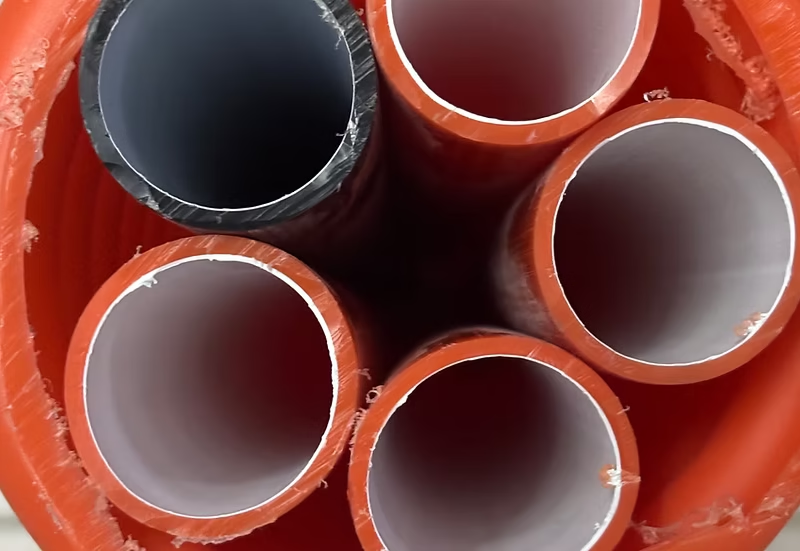
Typically, PECDs are the abbreviation for Polyethylene Corrugated Ducting. This is a ducting system made of polyethylene in which a corrugated outer layer can be found. The PECD systems differ from one another, depending on the choice of a product. In some cases they have only one tube. In some other cases, the systems have several pipes for organizing underground cables.
Typically, PECD is seen in:
Fiber optic networks.
Telecommunication infrastructure.
Broadband and FTTx projects.
Underground communication infrastructure.
Widespread infrastructures.
Construction of roads and similar processes.
The corrugated design allows the ducting to be used while routing underground cables.
Why Proper PECD Installation Is Important in Saudi Arabia
When installing an underground duct, ample planning is required because it needs to be suitable for its conditions and uses.
In Saudi Arabia, infrastructure work can deal with various ground conditions such as solid soil, sand, rocky ground, street crossings, factory and urban territories. The temperature, groundwater, vehicle loads, and construction may also alter the requirements for the installation.
Proper installation of PECD helps handle these conditions by implementing the correct design for the trench, selecting the right bedding, installing duct, and using protective layers.
Key Reasons for Proper Installation
1. Protecting the Fiber Optic Cable:
Proper installation of the duct plays an important role in ensuring the cable is protected against various damaging factors such as soil, sharp objects, and construction activities.
2. Duct Alignment :
Proper layering of the trench where the duct is placed allows keeping the duct in its proper position.
3. Less Damage of the Installation Process:
Proper way of utilizing, installing, and backfilling will guarantee minimum damage to the duct.
4. Ensure Better Conditions for Installation of the Cables:
Properly installed duct allows performing necessary works of cable pulling and blowing according to the duct and cable requirements.
5. Expansion of the Network in the Future:
Underground duct systems can be used for the installation of additional cables in the future, if the initial was properly designed.
6. Improved Quality of the Project:
The implementation of correct installation techniques guarantees smooth performance of the installation processes, as well as tracking the process.
PECD Installation Guide Saudi Arabia: Main Installation Stages
PECD Installation Guide Saudi Arabia- The installation of PECD involves several important stages. Each stage contributes to the quality and performance of the completed underground duct system.
The main installation stages include:
1. Route planning and site assessment.
2. Utility identification and excavation planning.
3. Trench excavation.
4. Trench preparation and bedding
5. .PECD transportation and handling.
6. Duct placement and alignment.
7. Duct jointing and connection.
8. Initial protective backfilling.
9. Warning tape and cable route identification.
10. Final backfilling and compaction.
11. Inspection, testing, and documentation.
The exact procedure, dimensions, and acceptance criteria should follow approved project drawings, applicable Saudi requirements, and manufacturer recommendations.
1. Route Planning and Site Assessment
Before starting PECD installation, project teams should assess the proposed underground route.
Route planning helps identify potential installation challenges and establish the required trench alignment, duct configuration, and installation method.
Important Route Planning Considerations
Proposed underground duct alignment.
Existing underground utilities.
Road crossings and access points.
excavation depth and width.Soil characteristics and ground conditions.
Existing drainage and water infrastructure.
Required separation from other utilities.
Manholes, handholes, and inspection chambers.
Required duct quantity and subduct arrangement.
Future network expansion requirements
.For projects involving roads, highways, industrial facilities, or developed urban areas, additional coordination may be necessary with the relevant authorities and utility owners.
Utility Identification
Before excavation, identify existing underground services such as:
Electrical cables.
Water pipelines.
Gas pipelines.
Sewerage networks.
Existing telecommunications ducts.
Drainage systems.
Other underground infrastructure.
Utility detection, trial pits, approved drawings, and site investigations should be used as required by the project.
Excavation should not begin until the necessary permits, approvals, and utility coordination procedures have been completed.
2. Trenching for PECD Installation
Trenching is one of the most important stages in the PECD installation process. The trench provides the designated space for positioning the duct system below ground.
The trench should be excavated according to the approved route drawings and project specifications.
Trench Depth
The required trench depth depends on several factors, including:
Type of road or installation area.Ground conditions.
Duct diameter and configuration.
Expected surface loading.
Presence of other underground utilities.
Local authority requirements.
Project-specific engineering standards.
There is no single trench depth suitable for every PECD installation. Depth requirements should be established through the approved engineering design and applicable authority specifications.
For installations beneath roads or areas exposed to heavy vehicle traffic, additional protection or a different installation arrangement may be required.
Trench Width:
The trench width should provide sufficient working space for installing the specified duct arrangement and placing suitable bedding and protective materials.
The required width depends on:
Number of ducts.
Outside diameter of the ducts.
Multi-duct configuration.
Required separation between ducts
.Installation equipment.
Bedding and side-fill requirements.For multiple PECD ducts, the trench should be wide enough to allow proper positioning without forcing the ducts against one another.
Trench Bottom Preparation
After excavation, the trench bottom should be inspected and prepared before bedding material is placed.
The bottom should be:
Properly graded.
Free from loose debris.
Free from sharp stones and damaging objects.
Stable enough to support the specified bedding.
Prepared to the required line and level.
Any unsuitable soil, protruding rock, or material that could damage the duct should be removed or treated according to the approved method statement.
3. Bedding for PECD Installation
Bedding is an important part of underground duct installation because it creates a suitable supporting layer beneath the PECD.
The bedding material should provide uniform support and help prevent direct contact between the duct and unsuitable trench-bottom material.
Purpose of Bedding
Proper bedding helps:
Provide continuous support beneath the duct.
Reduce localized pressure points.
Minimize the risk of duct deformation.
Maintain the required duct alignment.
Separate the duct from sharp or unsuitable materials.
Support the specified installation geometry.
Suitable Bedding Materials
Depending on the project specification and ground conditions, suitable bedding may include approved sand, selected fine soil, or other specified granular materials.
The selected material should meet the project's requirements for grading, cleanliness, compaction, and suitability for contact with the duct.
Materials containing large stones, sharp fragments, construction waste, or other potentially damaging objects should not be used directly around the duct.
Bedding Installation Procedure
Inspect the prepared trench bottom.
Remove unsuitable materials and sharp objects.
Place the approved bedding material.
Distribute the bedding evenly along the trench.
Level the bedding to the specified profile.
Check the required line and level before placing the PECD.
Confirm that the bedding thickness meets the approved project drawings.
The bedding thickness should be determined by the project specification rather than using an assumed universal value.
4. PECD Duct Handling and Transportation
Careful handling is critically important in order to avoid damage to the product both before and during the installation process.
Even though polyethylene duct products are intended for use as cable conduits, improper handling may still lead to deformation, scratched surfaces, crushed ducts, or structural damage.
Handling Recommendations
Use appropriate lifting and handling equipment
Avoid dragging ducts over sharp surfaces
Protect duct ends from any contamination
Avoid excessive bending and twisting
Avoid shocks during loading and offloading
Get products away from sources of destructive heat
Before installation, inspect the duct carefully
Follow the storage and handling instructions given by the manufacturer.
In the case of delivery of PECD coils, follow the recommended unwinding method for installation in order to avoid unnecessary twists and deformations.
Inspect the suspected damaged sections of duct before proceeding with installation.
5. PECD Duct Placement and Alignment
When the trench and bedding are prepared, the PECD may be placed according to the approved drawings.
Proper positioning of duct ensures the desired underground route is created for the installation of the cable.
Procedure for Duct Installation
:Step 1: Check Duct ConfigurationEnsure that the PECD is in accordance with the required specification of the project, which includes the specified diameter, number of paths and the configuration.
Step 2: Place DuctDuct should be carefully placed over the bedding. It should not be dragged or pushed into position.
Step 3: Maintain AlignmentDuct should be aligned along the specified route without unnecessary bends, sudden turns or displacement.
Step 4: Check SeparationIn case of multiple ducts, ensure there is proper distance and arrangement as per specifications.
Step 5: Check DuctLook for any sign of damage, modification or contamination before placing it under cover.
Step 6: Secure ArrangementUse appropriate supports or other accessories wherever duct configuration and installation design requires it.
6. Jointing and Connection of PECD
In situations in which the route requires multiple ducts sections to be installed, the proper joints and methods of joining according to the manufacturer should be used.
The method of connection should depend on the manufacturer recommendations and product design.
The important points when making the joints:
Check compatibility between duct sections before making the joints.
Make sure that the right joints are used.
Prepare the ends of the ducts according to the instructions of the manufacturer.
Keep the surfaces clean before making the joint.Align the joint properly.
Do not cause any damage while making the joint.
Check the joint after making the installation.
Follow any requirements in respect of sealing and testing of the connection.
In case the project requires protection from water, soil or other conditions, the connection system should have the appropriate documentation. Never think that the device will always create a waterproof joint.
7. Initial Backfilling and Duct Protection
The following step after putting in place and examining the PECD is to do the first protective backfilling.
This layer is essential since it encases the duct and isolates it from the rest of the excavated substance.
Use of Initial Backfilling:
Initial backfilling is beneficial since:
Protects the duct from coming into direct contact with unsuitable material.
Decreases the chances of damage from stones and waste.
Keeps installed duct in position
Gives the surrounding support.
Minimizes chances of displacement in the future backfilling operation.
How Initial Backfilling is Executed
Check the alignment of the duct.
Check the ducts and other connections that can be reached.
Use the approved selected material for duct surrounding.
Carefully backfill the spaces under and beside the duct.
Make sure no voids appear.
Use the backfill material for filling the space above the duct.
Compact the backfill materials according to the approved method and equipment.
Avoid means of direct heavy mechanical compaction above the duct unless written in the design.
Conclusion-PECD Installation Guide Saudi Arabia
A successful underground duct installation involves precise planning, systematized trench making, correct placement of the duct in the trench, proper backfilling, and cable protection.This PECD Installation Guide Saudi Arabia points out the stages of the PECD installation needed to be applied for the installation of polyethylene corrugated ducts used in telecommunications, fiber optic, broadband, and underground projects.Each of the steps of installation contributes to the results of the installation, and these steps include route inspection, trench excavation, joining the ducts, protective covering, using warning tape, compaction, and everything needed for the final inspection.Installation of the underground structures in Saudi must comply with site characteristics, loads, engineering drawings, requirements set by the authorities, and recommendations of manufacturers.Following systematic PECD installation allows contractors to create an organized underground cable route and construct reliable telecommunications infrastructures.
Frequently Asked Questions -PECD Installation Guide Saudi Arabia
1. What is PECD installation?
PECD installation is the process of placing polyethylene corrugated ducts underground to create protected pathways for fiber optic, telecommunications, broadband, and other communication cables.
2. What is covered in the PECD Installation Guide Saudi Arabia?
The PECD Installation Guide Saudi Arabia covers route planning, trench excavation, bedding, duct placement, jointing, backfilling, warning tape, cable protection, testing, and quality inspection.
3. What is the purpose of bedding in PECD installation?
Bedding provides a suitable supporting layer beneath the duct, helps maintain alignment, and reduces direct contact with sharp stones or unsuitable trench-bottom materials.
4. What material should be used for PECD bedding?
Approved sand, selected fine soil, or specified granular material may be used depending on the project requirements and manufacturer recommendations.
5. How deep should PECD be installed in Saudi Arabia?
The required installation depth depends on the project design, installation location, surface loading, duct configuration, and applicable authority requirements. Contractors should follow approved drawings rather than assume a universal depth.
6. Why is backfilling important in PECD installation?
Backfilling provides support around the duct, helps maintain its position, and protects it from surrounding soil and construction activities when suitable materials and compaction methods are used.
7. What is the purpose of warning tape above underground PECD ducts?
Warning tape helps identify buried telecommunications infrastructure and alerts future excavation teams to the presence of underground duct routes.
8. Can PECD be used for underground fiber optic cables?
Yes. PECD can be considered for underground fiber optic cable pathways when the duct dimensions, configuration, mechanical properties, and installation requirements are suitable for the selected cable.
9. How is a PECD duct inspected before cable installation?
Inspection may include visual checks, duct continuity verification, cleaning, and mandrel testing where required by the project specification.
10. What are the common PECD installation mistakes?
Common mistakes include incorrect trench dimensions, unsuitable bedding, poor duct alignment, incompatible joints, insufficient protective surround, uncontrolled compaction, and failure to inspect the duct before cable installation.